Straight Router Bits vs Grooving Bits: Choosing the Right Cut
A straightforward way to compare flat-bottom cutting, dedicated grooves and the profile detail required by the finished part.
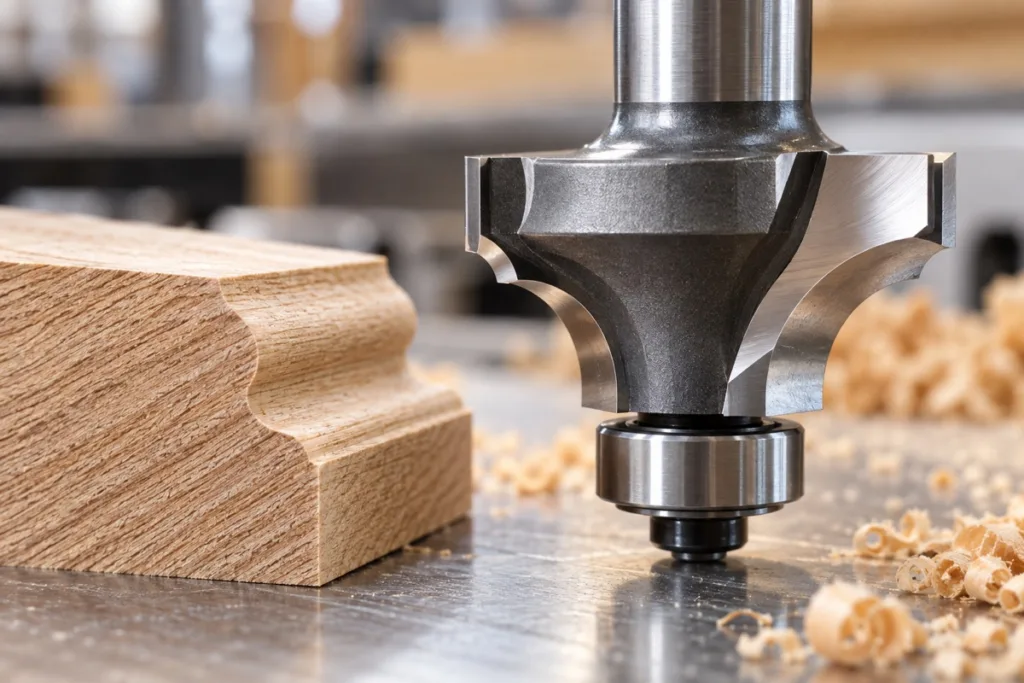
Straight router bits and grooving tools can both remove material along a line, but the required finished profile should determine the choice. Start from the joint, slot or channel you need to make.
When a straight profile is suitable
A straight cutting profile is useful when the required cut has parallel walls and a defined flat bottom. Confirm the groove width, depth, material and whether the operation is performed in one pass or as part of a programmed toolpath.
When the groove shape matters
Some applications require a V-form, round-bottom, T-slot or another shaped channel. In these cases, select the tool based on the actual profile and not only on the word “groove.” A cross-section avoids ambiguity.
Check the assembly requirement
For joinery or fitted components, the resulting slot must match the mating part. Include the required clearance, depth and visible finish in the project brief. This is especially important for repeated cabinet or furniture production.
Use the workpiece as the reference
Share a drawing or photo of the finished part with the material and machine details. This gives the technical review a clear basis for proposing a standard product family or a custom geometry.