How to Choose a Router Bit for CNC Woodworking
A practical sequence for matching the cutting task, workpiece, geometry and machine setup before requesting a quotation.
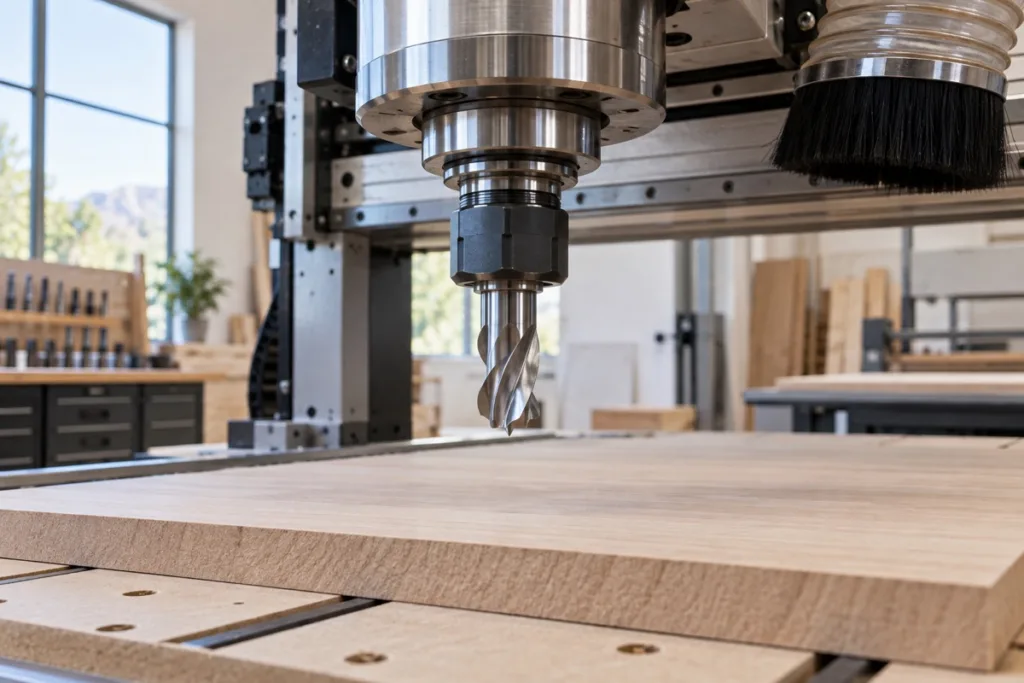
A suitable CNC router bit starts with the cut you need to make. The tool profile, cutting diameter and machine setup all affect whether the result is clean, repeatable and practical for production.
Start with the operation
Define the required result before selecting a tool family. A straight groove, an engraved V-cut, a bearing-guided trim and a shaped cabinet-door edge need different profiles. A photo of the finished workpiece or a simple cross-section is often more useful than a generic tool name.
Confirm the workpiece and finish
State whether the material is solid wood, plywood, MDF, laminate or another board. Include the expected finish, visible edge quality and whether the cut is for a final surface or a later assembly step.
Match the tool to the machine
Confirm the CNC spindle or router, collet size, available cutting depth and working conditions. Share the shank requirement, not just the cutting diameter. This prevents a selected profile from being incompatible with the actual setup.
Prepare a usable inquiry
Send the target profile, key dimensions, material, machine and planned quantity together. CUTQOR can then review standard catalog options first and discuss a custom tool only when the catalog profile does not fit.